Materials, Manufacturing, Quality & Testing, Design & Development
Common Challenges in Electrospun Nanofiber Production: Problems and Solutions for Industrial Manufacturing
Updated
Introduction
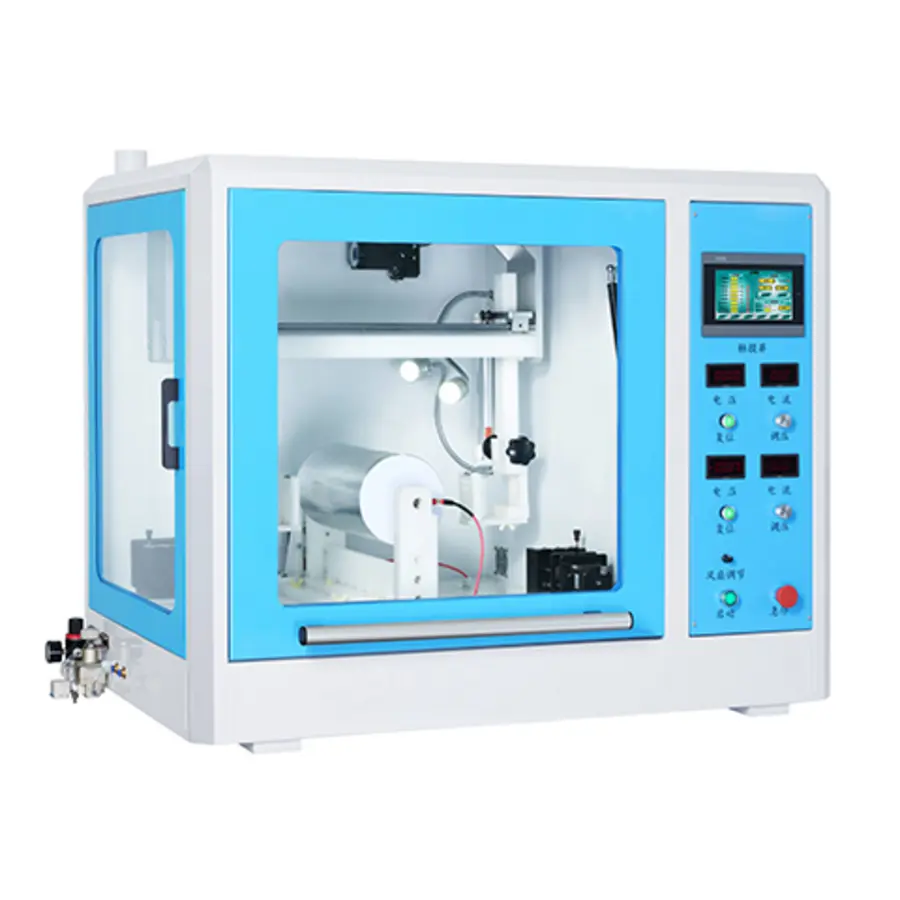
Electrospinning is a preferred technique for producing nanofibers with high surface-to-volume ratio and tunable properties, useful in medical devices, filtration media, and more. Yet when scaling from lab-scale systems to industrial production, manufacturers often run into persistent technical and operational problems. This article addresses the most common industrial electrospun nanofiber production problems and provides evidence-based troubleshooting strategies for each.
Key Problems in Electrospun Nanofiber Production
Several recurring challenges can disrupt quality, process stability, or cost efficiency in nanofiber manufacturing:
- Scalability bottlenecks
- Needle clogging and maintenance
- Variation in fiber diameter and morphology
- Solvent toxicity and environmental management
- Process parameter control
- Batch-to-batch reproducibility
Below, each problem is described along with actionable solutions and process improvements.
Scalability Challenges in Electrospun Nanofiber Manufacturing
Why Scaling Up Is Hard
Lab-scale electrospinning typically uses a single-needle system, producing just grams of nanofibers per hour. Most commercial applications require kilogram or higher output, which is difficult because:
- Production rates are limited by the number of jets (needles)
- Equipment design influences jet stability, electric field uniformity, and maintenance
- Solvent handling, evaporation, and recovery needs increase dramatically
- Process monitoring and control become more complex
Overcoming Scalability Issues
Strategies include:
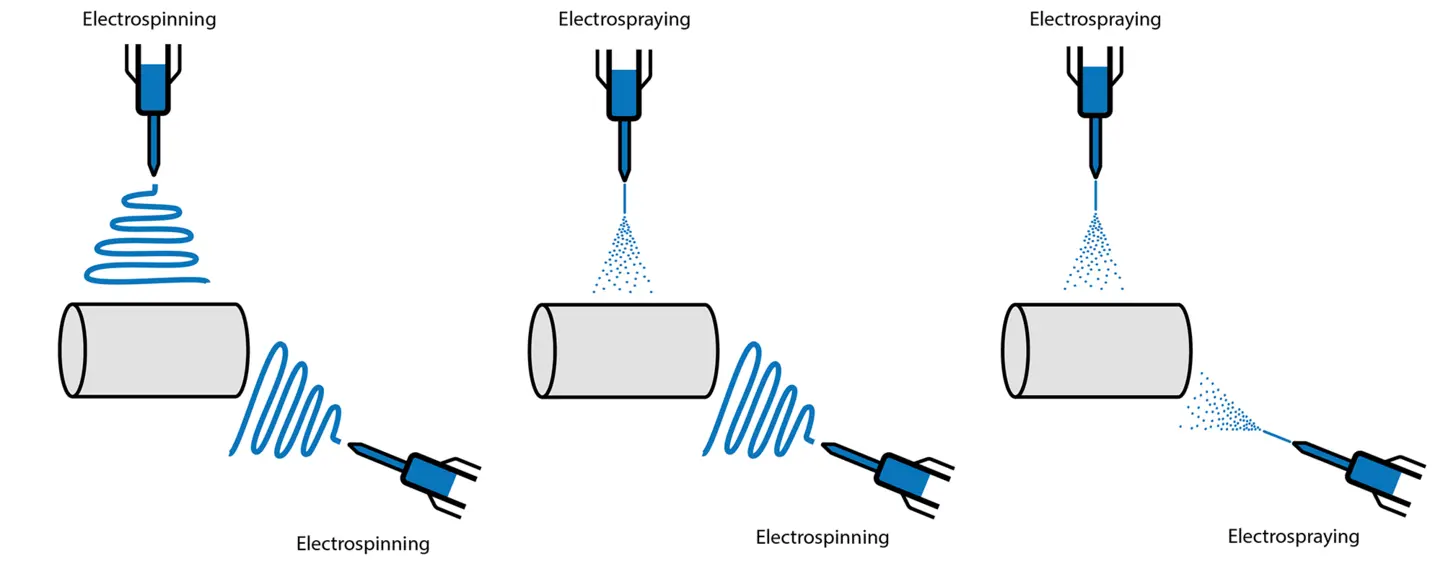
- Multi-needle arrays: Can boost throughput but introduce issues such as electric field interaction between needles, uneven jetting, and more frequent clogging.
- Needleless electrospinning systems: Use free liquid surfaces to produce multiple jets at once, increasing throughput up to several hundred grams per hour. These systems help avoid most needle-related maintenance, but require tight process and material control as fiber uniformity can be harder to maintain at scale.
- Centrifugal (force-spinning), melt electrospinning, and solution blow spinning: Alternative high-throughput nanofiber production methods may provide process advantages or suit different polymer materials.
- Closed-loop process monitoring and automation: Use of sensor-driven, automated adjustments helps keep parameters like voltage, temperature, and moisture within target windows for large-scale runs.
Summary table:
| Method | Throughput | Key Challenges |
|---|---|---|
| Single-needle electrospinning | Low (g/hr) | Easy control, not scalable |
| Multi-needle arrays | Medium (10s g/hr) | Clogging, electric field interference |
| Needleless/free-surface | High (100s g/hr) | Harder to control fiber uniformity |
| Centrifugal/blow spinning | High (50–450g/hr) | Material compatibility, lower control |
Needle Clogging: A Persistent Maintenance Issue
- Problem: In multi-needle systems, nozzles can clog due to solution properties, drying at the tip, or particle buildup, requiring frequent cleaning and causing run stoppages.
- Impact: Reduces uptime, increases labor and risk of contamination, introduces batch inconsistency.
Practical Solutions
- Material handling: Filter solutions to remove particulates, and use appropriate solvent balance to minimize tip drying.
- Process optimization: Adjust flow rates and ambient humidity to reduce clog formation; regular purging steps can maintain flow.
- Design options: Move toward needleless systems or use self-cleaning nozzles in larger installations. For critical applications, consider automatic backup jets that come online when clogs are detected.
Solvent Toxicity and Environmental Controls
Many electrospun nanofibers use volatile organic solvents, which can:
- Present health hazards to operators
- Require regulatory compliance for emissions
- Drive up costs for ventilation, solvent recovery, and waste management
Addressing Solvent Hazards
- Solvent selection: Where possible, switch to greener or water-based solvent systems compatible with target polymers for medical and filtration applications.
- Environmental controls: Install efficient ventilation and capture systems, such as solvent recapture and recycling loops.
- Personal protection and plant design: Ensure adequate PPE and safety protocols for workers. Incorporate equipment with solvent vapor containment.
- Process alternatives: Investigate melt electrospinning or supercritical fluid electrospinning where solvent emissions are a critical constraint.
Fiber Quality: Control and Consistency Issues
Typical Defects
- Bead formation (droplets rather than fibers): Often caused by imbalance in viscosity, surface tension, or applied voltage.
- Non-uniform fiber diameter: Fluctuations in process conditions (voltage, humidity, flow rate) or material properties (molecular weight, concentration).
- Misalignment: Random orientation rather than aligned fibers can undermine performance for tissue scaffolds or filtration.
How to Improve and Stabilize Fiber Morphology
- Solution preparation: Maintain tight control over polymer concentration, viscosity, and conductivity. Use consistent sources or batches.
- Environmental controls: Keep temperature and humidity in a narrow, monitored range for all runs.
- Process parameter tuning: Optimize and monitor voltage, tip-to-collector distance, and solution flow rate;
- Inline monitoring: Use optical inspection, laser diameter gauges, or thickness scanners for real-time defect detection and adjustment.
- Collector design: For aligned fibers, use rotating drum or parallel electrode collectors rather than a stationary plate.
Specifying and Controlling Process Parameters
Electrospinning is sensitive to a range of variables, including:
- Polymer solution parameters: viscosity, molecular weight, solvent volatility, conductivity
- Process settings: applied voltage, tip-to-collector distance, flow rate
- Environmental conditions: humidity, temperature, air flow
Any drift in these values, especially during prolonged production, can cause process instability or compromise fiber quality.
Solutions for Parameter Control
- Standard operating procedures: Document and standardize all preparation, start-up, and shutdown steps.
- Automation: Use closed-loop feedback systems for real-time adjustment of voltage, temperature, and feed rates.
- Batch traceability: Record batch information, operator interventions, and environmental data for each run to identify and correct sources of variability.
Reproducibility: Ensuring Batch-to-Batch Consistency
Industrially, it’s not enough to achieve desired fiber properties once. Batch-to-batch consistency is essential for regulatory approval, customer trust, and downstream processing.
Common Causes of Irreproducibility:
- Material variability (polymer source, impurities, solvent batch)
- Drifting ambient conditions
- Manual process interventions
Best Practices:
- Supplier qualification and incoming quality checks for all raw materials
- Automated, logged environmental and process controls
- Use of statistical process control (SPC) and routine quality assurance testing on fiber properties
Cost and Operational Considerations
While not a technical defect, high costs related to equipment, solvents, energy use, and labor can make some nanofiber products commercially unviable. Key actions to improve operational efficiency:
- Adopt scalable setups (needleless, automation) to reduce labor per output
- Maximize solvent recovery and use greener alternatives
- Energy management via equipment scheduling and ongoing process optimization
Conclusion: Troubleshooting and Optimizing Industrial Electrospinning
Industrial electrospun nanofiber production faces several persistent but addressable challenges. The most pressing are linked to scalability, fiber quality, process maintenance, environmental hazards, and reproducibility. Addressing these with a mix of equipment upgrade, process automation, material standardization, and environmental controls is essential to achieve reliable, commercially viable nanofiber manufacturing for medical, filtration, and advanced material markets.